
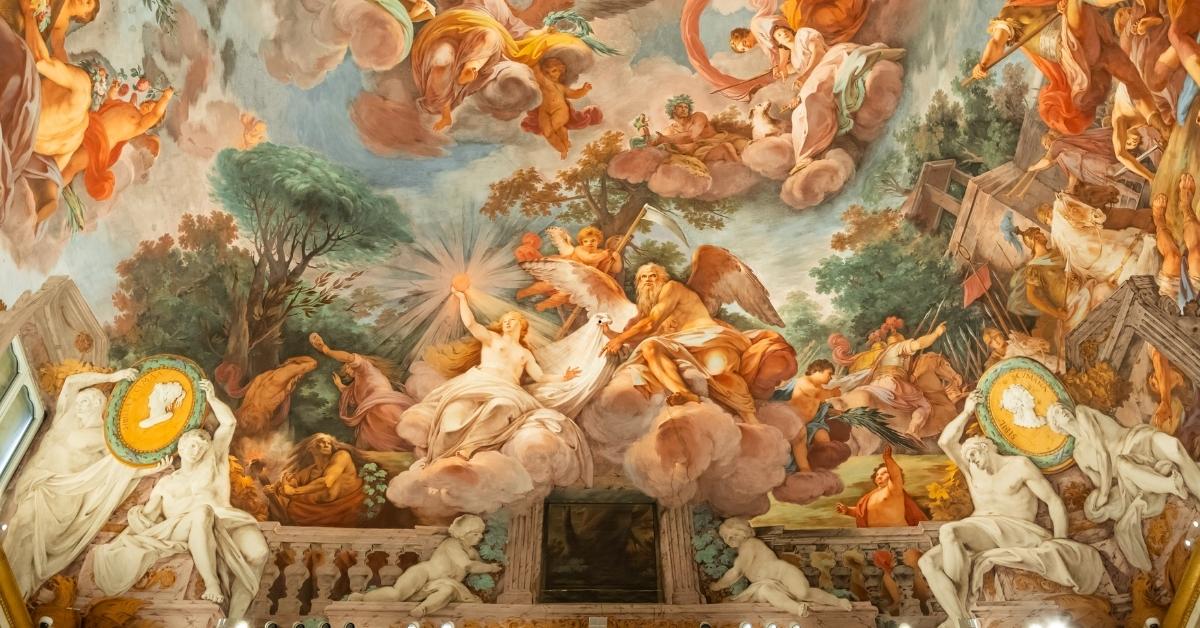
The Vatican Museums, for all their glory, can leave you shell-shocked, shuffling through endless corridors with a thousand other travelers. The Borghese Gallery is the opposite of that. It’s intimate, curated, and feels almost like a secret—even though it houses one of the world’s greatest art collections.
Built as a lavish party villa for a powerful cardinal, this jewel box of a museum offers a two-hour immersion into Baroque brilliance. You won’t find crowds elbowing for a view here. The gallery limits entry to just a few hundred people at a time, and you’re given a strict two-hour window to explore. It forces you to slow down, to actually look. When I visited with my wife, that time limit felt less like a constraint and more like a gift—it kept us focused, present, and made every moment in those opulent rooms count.
Here’s everything you need to know to plan the perfect visit.
Stop experiencing Italy like everyone else. Your trip is different because you are different. Tell me when you’re going, who you’re traveling with, where you want to go, what you absolutely want to see and do, your budget, and anything else that matters to you. I’ll put it all together into a tailor-made Italy itinerary that tells you where to go, where to stay, what to eat, and how to make the most of your time. Use this form
The Man Behind the Masterpieces
To understand the gallery, you have to understand Cardinal Scipione Borghese. He was the nephew of Pope Paul V, a man who wielded immense power and used it ruthlessly to build one of the most staggering art collections in history.
He was Bernini’s first major patron and an early champion of Caravaggio. But Scipione wasn’t above a little creative acquisition. He had Raphael’s Deposition secretly removed from a church in Perugia and replaced with a copy. He even imprisoned an artist to get his hands on a painting he wanted. He was a collector with a passion bordering on obsession.
The villa itself was built between 1613 and 1616 as a suburban retreat—a place to showcase his treasures and throw legendary parties. Over the centuries, the collection changed hands, was added to, and in 1807, a significant portion of the family’s antiquities were sold to Napoleon, which is why you’ll find Borghese pieces in the Louvre. The Italian state finally acquired the building and its remaining collection in 1902, opening it to the public as a national museum.
The Stars of the Show
The gallery is split across two floors, and each one is packed with absolute masterpieces.
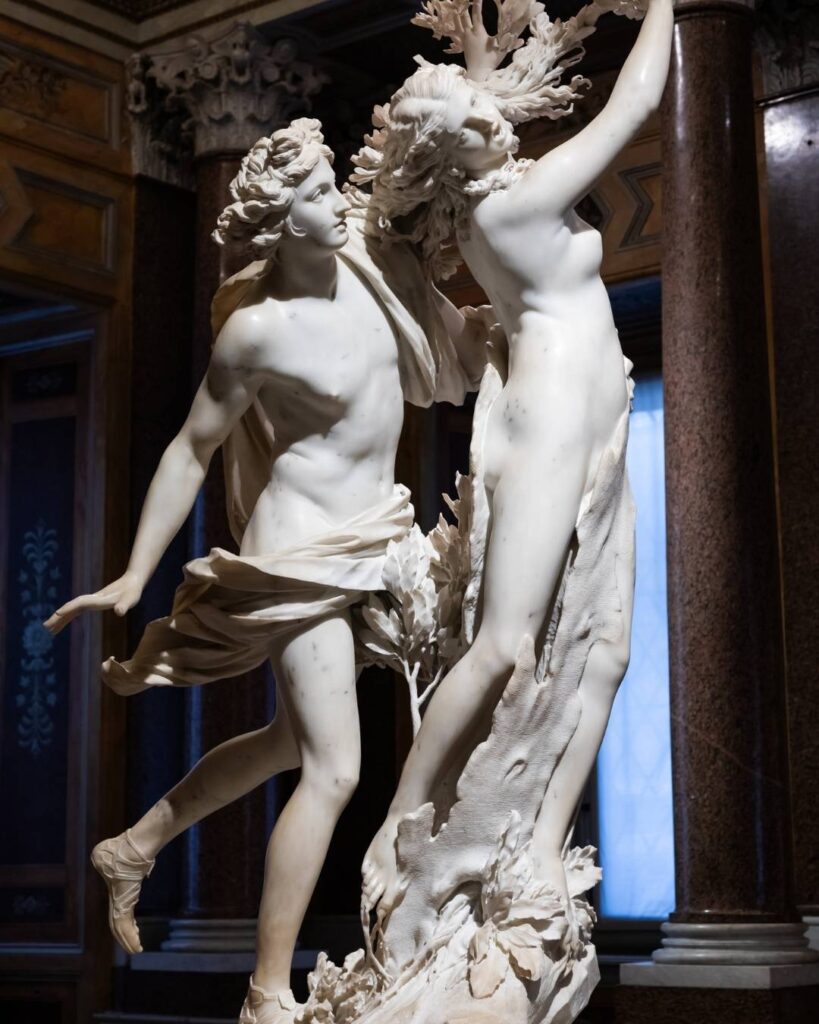
On the ground floor, you’re in Bernini territory. The man was a prodigy, and you can see it in every piece. His Apollo and Daphne is a marvel of motion, capturing the exact moment a nymph transforms into a laurel tree, her fingers becoming leaves and her toes taking root. It’s breathtaking, but my personal favorite is The Rape of Proserpina.
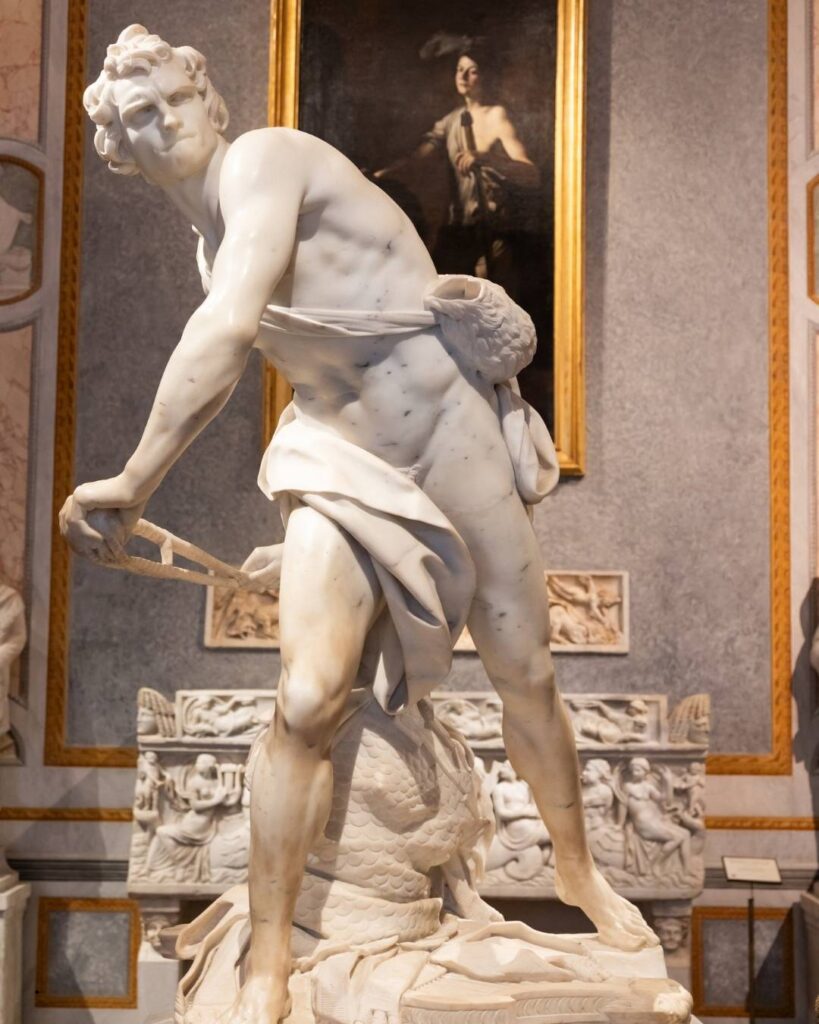
The drama is incredible—you can practically see the fear in Proserpina’s face and feel the grip of Pluto’s fingers pressing into her marble thigh. Bernini’s David is also here, but unlike Michelangelo’s serene, contemplative version, this one is caught mid-swing, his body twisted and ready to strike.
Upstairs, the picture gallery is dominated by Caravaggio. The gallery boasts more of his works than any other collection. His Boy with a Basket of Fruit is a tender early work, but he really flexes his revolutionary use of dramatic light and shadow in pieces like Madonna and Child with St. Anne and David with the Head of Goliath.
Beyond Caravaggio, you’ll find Raphael’s emotional Deposition, Titian’s enigmatic Sacred and Profane Love, and a stunning neoclassical sculpture of Pauline Bonaparte as Venus Victrix, commissioned from Canova.
Planning Your Visit
Here’s where most people stumble. You cannot just show up. The Borghese Gallery has a strict timed-entry policy to protect the art and the experience. You must book a ticket in advance for a specific time slot.
Tickets generally cost around 16 euros plus a 2-euro reservation fee, with discounts for EU youth and free entry for children under 18. The official website is your best bet for booking. And remember, you have exactly two hours from your entry time. It’s enforced. The gallery staff will gently encourage you to exit on time. It sounds strict, but with the limited entry, it means the rooms never feel crowded.
The gallery is open Tuesday through Sunday from 9:00 AM to 7:00 PM, and it’s closed on Mondays, Christmas Day, and New Year’s Day. If you can snag that 9:00 AM time slot, you’ll have the place at its quietest. Summer weekends are chaos everywhere in Rome, so aim for a weekday morning if your schedule allows.
Getting there is straightforward. The address is Piazzale Scipione Borghese, and the nearest metro stop is Flaminio on Line A. From there, it’s a pleasant walk through the Villa Borghese gardens. You can also take buses that stop near Piazza di Siena. The approach through the park is part of the experience—you’ll pass by fountains, shady paths, and locals enjoying their afternoon, which builds anticipation nicely.
Note: If you need a guided tour, which I highly recommend, this is the best place to book. It is also easier to find tickets there than on the official website.
Insider Tips for the Perfect Visit
Remember that two-hour limit. It goes by faster than you think, so have a plan. Decide on your top five or six must-see pieces before you walk in, and make a beeline for them. You can always circle back for the rest, but if you wander, you’ll find yourself rushing through Bernini’s room with only minutes to spare.
There’s a free cloakroom for small bags, umbrellas, and any sharp objects. Take advantage of it—you don’t want to be lugging a bulky backpack through those narrow corridors. Photography is allowed without flash in most rooms, but always check for signs indicating restrictions.
Wear comfortable shoes, like these ones. The floors are marble, and you’ll be standing and walking for two solid hours. As for dress code, it’s not as strict as the Vatican, but smart-casual is always a safe bet. Leave the beachwear for the coast.
Once your two hours are up, don’t rush off. The Villa Borghese gardens are right there, sprawling across nearly two hundred acres. It’s the perfect spot for a picnic, a lazy stroll, or just sitting on a bench and processing everything you just saw. The view from the Pincio Terrace overlooking Piazza del Popolo is one of the best in Rome.
Frequently Asked Questions
Is the Borghese Gallery worth it? Without question. If you love art, history, or just beautiful spaces, it’s non-negotiable. Many travelers rank it above the Vatican Museums simply because the experience is so personal and unhurried.
Can you buy tickets at the door? Technically no. The gallery only admits around three hundred sixty people at a time, and those slots fill up days or even weeks in advance. Booking online is mandatory.
Are guided tours available? Yes, and they’re highly recommended. The stories behind these works are as compelling as the art itself, and a good guide brings them to life in a way that a placard never can. You can book tours through the official site or through third-party companies. This is the one I recommend.
How long does the visit take? Exactly two hours. That’s the maximum time allowed, and it’s plenty to see the highlights with focus.
Is there Wi-Fi? Yes, free Wi-Fi is available throughout the gallery.
Final Thoughts
The Borghese Gallery is Rome at its finest. It’s a place where the art, the architecture, and the history all converge into something unforgettable. The strict entry policy, the two-hour limit, the reservation system—it all sounds like a hassle until you’re standing in front of Bernini’s Apollo and Daphne with hardly anyone else in the room. Then it makes perfect sense.
So here’s my advice. Book your tickets as soon as you know your travel dates. Slots disappear quickly, especially during peak season. Plan your route. Wear comfortable shoes. And when you’re standing in that stunning room, surrounded by marble that looks like it’s about to breathe, take a moment to appreciate that you’re experiencing one of the great treasures of the Western world—without the chaos.
My wife and I still talk about that visit. It was the highlight of our Roman holiday, and I suspect it will be yours too.
NOTE BEFORE YOU GO: Italy rewards travelers who go prepared. And it is easy to ruin your trip. I have a checklist for you of things you should never go to Italy without. CHECK IT OUT HERE. I have also curated a list of some of the best hotels in Italy. I would highly recommend checking them out before booking. THESE ARE THE BEST HOTELS IN ITALY. And for unique experiences, attractions, and tours, don’t book before CHECKING THIS OUT. Thank me later!