
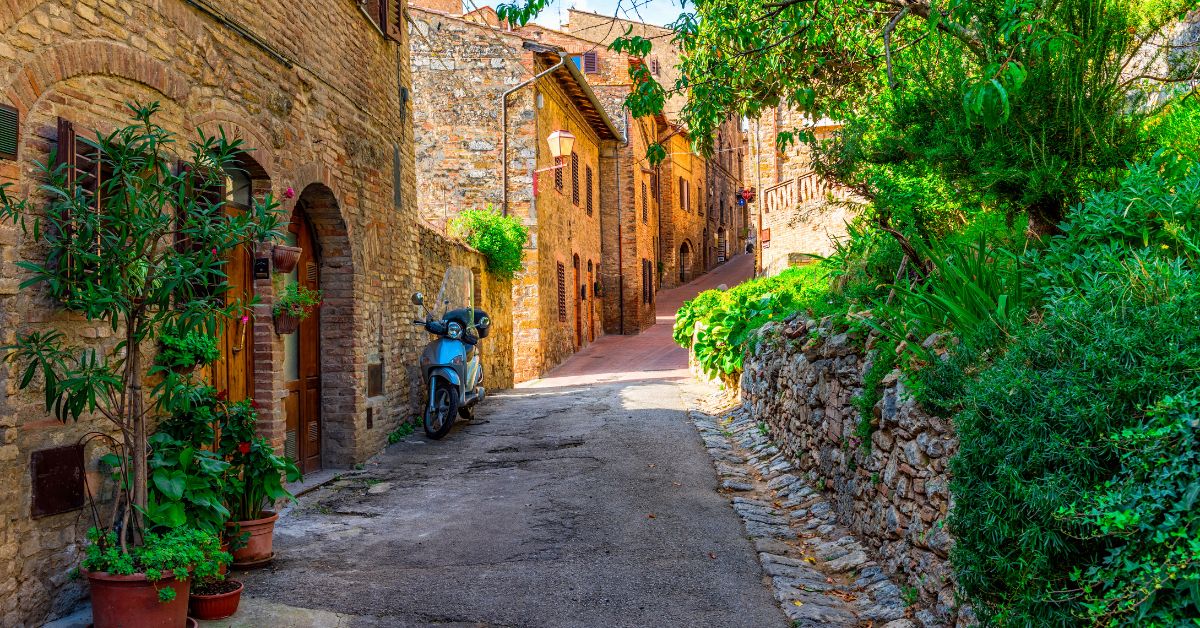
On my first trip to Italy, I did what everyone does: Rome, Florence, Venice. And don’t get me wrong – the Colosseum at sunset is magical, and the Duomo made my jaw drop. But so did the crowds. The selfie sticks. The €8 cappuccinos. The hour-long lines just to see a bridge.
So I went back. But this time, I did something different.
I rented a tiny Fiat, threw a paper map on the passenger seat, and told myself: no city with a direct high-speed train from Rome. What I found changed how I think about Italy forever.
These 9 towns are the real Italy. They are beautiful in that quiet, crumbling, slow-moving way that makes you want to cancel the rest of your trip and just stay. And I promise – you have never heard of most of them.
Let me take you there.
Before We Start: What Makes These Towns Special
A quick note before diving in. I am not a travel agent or an influencer who got paid to write this. I am just someone who spent enough time driving through Italy’s back roads, getting lost, eating pasta in places where no one spoke English, and taking notes while at it.
Here is what I learned: the famous cities are famous for a reason, but the borghi (villages) are where Italy actually lives. These 9 towns share three things:
- No train station within walking distance (which keeps the day-trippers away)
- A population under 3,000 people (you will hear church bells, not traffic)
- At least one jaw-dropping view that has never been on Instagram (yet)
Let’s go.
1. Civita di Bagnoregio – Lazio (The Dying Town)

Best time to visit: October or April. Never August.
I stood at the edge of a narrow footbridge, looking up at a stone village balanced on a crumbling volcanic plateau. Below me, fog filled the valley like a bowl of milk. Above me, Civita looked like it was floating.
Locals call it “il paese che muore” – the dying town. The hill is eroding. One day, this place may literally fall off the map. But right now, it is very much alive.
Why you have never heard of it: You cannot drive here. You park in a modern town called Bagnoregio, then walk a 300-meter suspended bridge. Most tour buses skip it because the bridge scares them.
Must-see one thing: The Porta Santa Maria – the only gate into the town. Walk through it at 8:00 AM before anyone else arrives. You will feel like you discovered a lost civilization.
Local food to try: Buccellato – a ring-shaped aniseed cookie. An old woman bakes them in a wood-fired oven on the main square. She does not have a website. She opens when she feels like it.
My secret tip: Stay overnight in the one small B&B inside the town. After 6:00 PM, the day visitors leave, and you have the entire village to yourself. I sat on a stone wall and watched the sunset turn the valley purple. Not another soul in sight.
2. Bobbio – Emilia-Romagna (The Monastery Town)
Best time to visit: Late spring (May–June) when the river is full but not flooding.
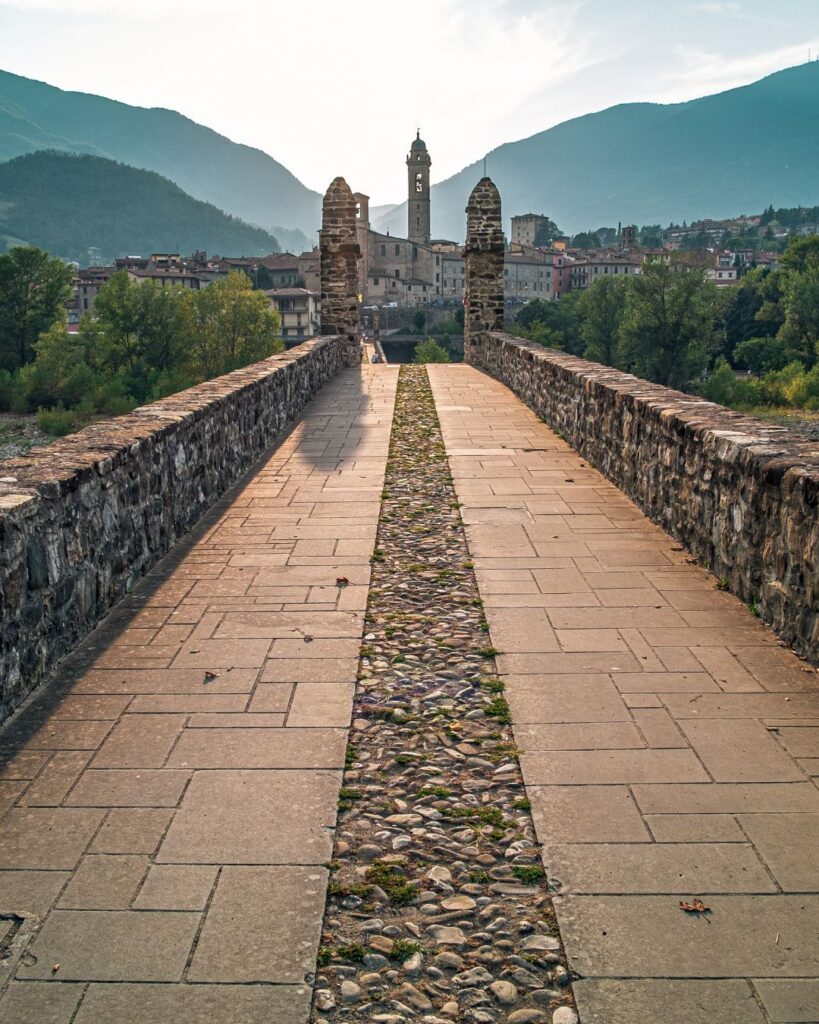
Bobbio surprised me. I had never heard of it, even though it is only two hours from Milan. The town wraps around a massive medieval bridge called the Ponte Gobbo – the “Hunchback Bridge” – which arches across the Trebbia River like a crooked spine.
Saint Columbanus founded an abbey here in 614 AD. That abbey still stands. Its library contains manuscripts so old they are kept in oxygen-free cases.
Why you have never heard of it: It is tucked between two larger tourist regions (the Italian Lakes and the Ligurian coast). Everyone drives past Bobbio to get somewhere else. That is exactly why you should stop.
Must-see one thing: The Abbey of San Colombano. The crypt is older than most European countries. I stood inside and felt the cold seep through my shoes – and also felt something else. Silence like I have never experienced.
Local food to try: Pisarei e faśö – handmade pasta dough rolled into tiny balls, served with bean sauce. Hearty, simple, and exactly what monks ate 1,500 years ago.
My secret tip: Bobbio has a tiny train station, but only two trains a day stop here. Do not rely on it. Drive. And when you cross the Hunchback Bridge, stop halfway and look upstream. The view of the river cutting through green hills is worth the entire trip.
3. Castelluccio di Norcia – Umbria (The Flower Explosion)
Best time to visit: Late June to early July for the fioritura (flowering). Otherwise, September for golden light and no crowds.
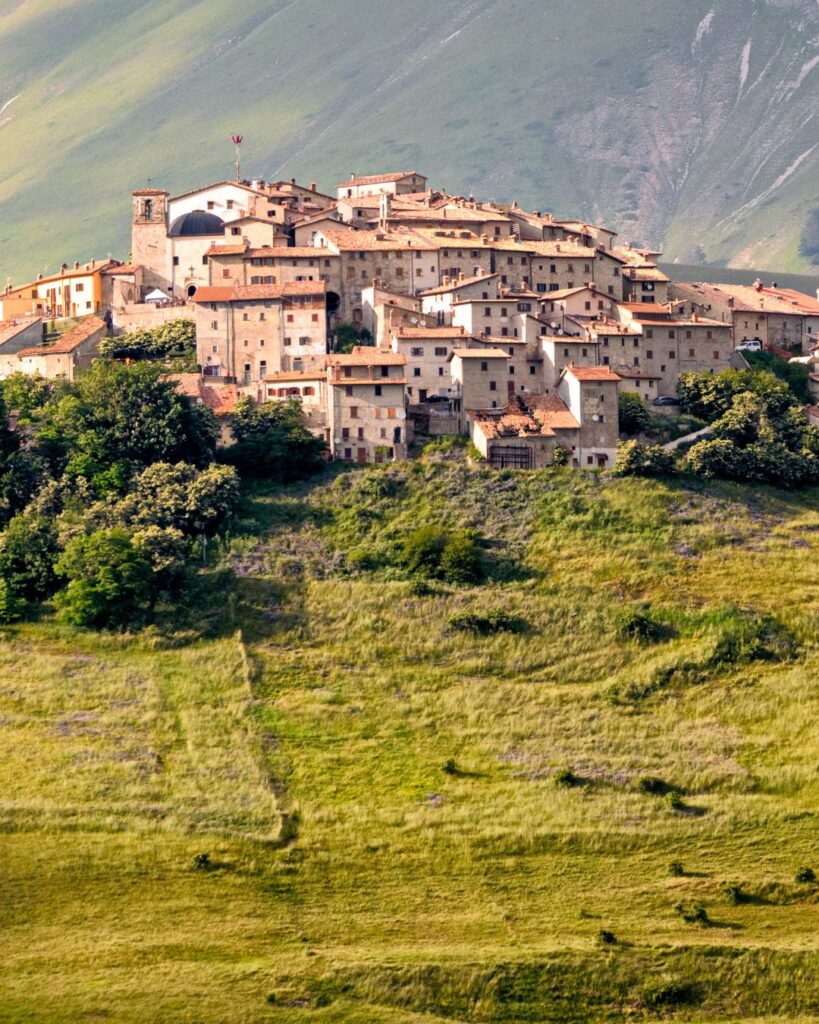
I arrived here in late June, and I actually gasped. The entire Piano Grande – a vast, flat plain surrounded by mountains – was covered in red, yellow, purple, and white wildflowers. Lentils grow here. And when they bloom, the fields turn into a living painting.
The town itself sits on a hill overlooking this plain. It was rebuilt after a devastating earthquake in 2016. New stone walls, same medieval layout. The locals are resilient and proud.
Why you have never heard of it: The road here is long and winding. From Rome, it is a three-hour drive on roads that sometimes turn to gravel. Most tourists give up. Do not.
Must-see one thing: Walk to the edge of the town’s main piazza and look east. The plain stretches for miles. In July, it looks like a Persian carpet made of flowers.
Local food to try: Lenticchie di Castelluccio – the famous lentils. They are small, delicate, and do not need soaking. Eat them in a simple soup at Ristorante La Ginestra. The owner will tell you his grandfather grew the same lentils.
My secret tip: Do not just stay in the town. Hike down to the plain and walk through the flowers. But stay on the paths – the farmers get angry if you trample their crops. Also, bring a sweater. Even in summer, the altitude (1,452 meters) makes evenings cold.
4. Santo Stefano di Sessanio – Abruzzo (The Starry Sky)
Best time to visit: July for the Notte della Taranta music festival, or September for hiking weather.
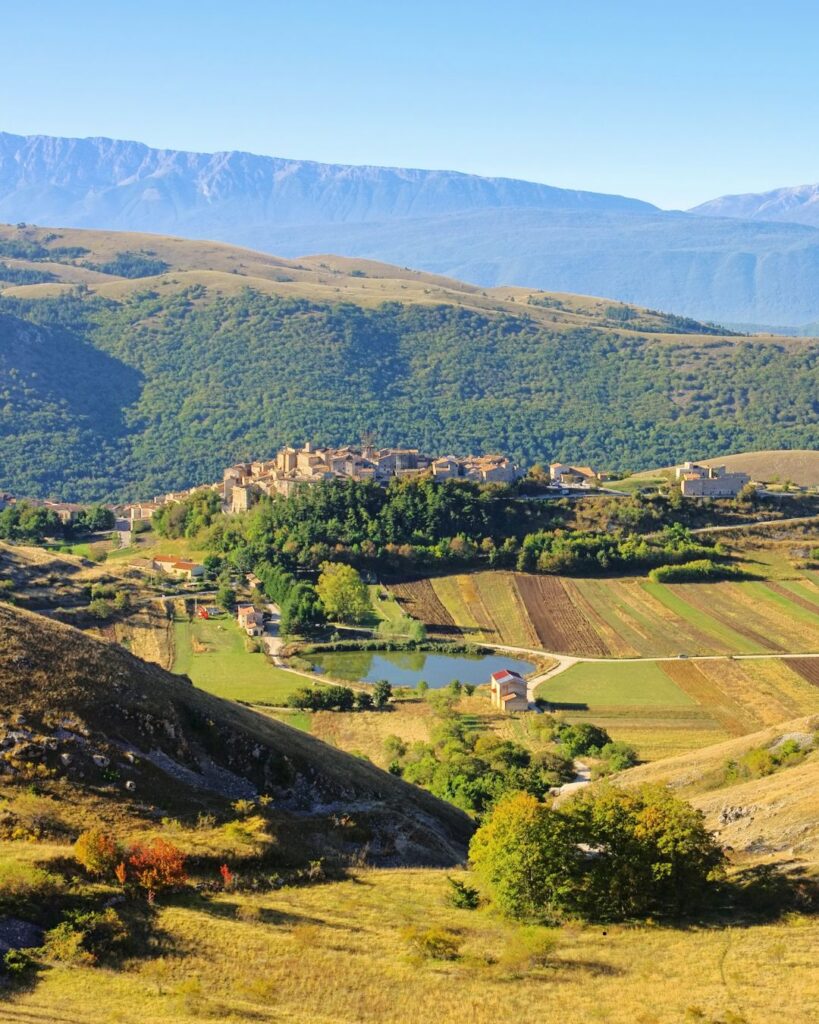
This town is a fortress. Literally. It was built as a defensive stronghold for the Medici family in the 1500s. Today, it is one of the best-preserved medieval villages in all of Italy – and almost no one goes there.
The streets are steep, narrow, and made of grey stone. The buildings are the same grey. At sunset, everything turns gold. And at night, because there is zero light pollution, the Milky Way stretches across the sky like a river.
Why you have never heard of it: Abruzzo is Italy’s forgotten region. Tourists go to Tuscany next door. Abruzzo gets the leftovers. Their loss.
Must-see one thing: The Medici Tower. You can climb it for €2. The spiral staircase is narrow and dark. At the top, the wind hits you hard, but the 360-degree view of the Gran Sasso mountains is unforgettable.
Local food to try: Arrosticini – grilled sheep skewers. That is it. Just meat, salt, and fire. They are sold from tiny roadside stands outside the town walls. Eat them standing up, with a glass of red wine.
My secret tip: Stay at Sextantio Albergo Diffuso. It is a hotel spread across multiple restored buildings in the town. Your room might be an old stable or a wool-weaving workshop. No televisions. No minibars. Just stone walls, candles, and silence. It changed how I think about hotels forever.
5. Neive – Piedmont (The Wine Lover’s Secret)
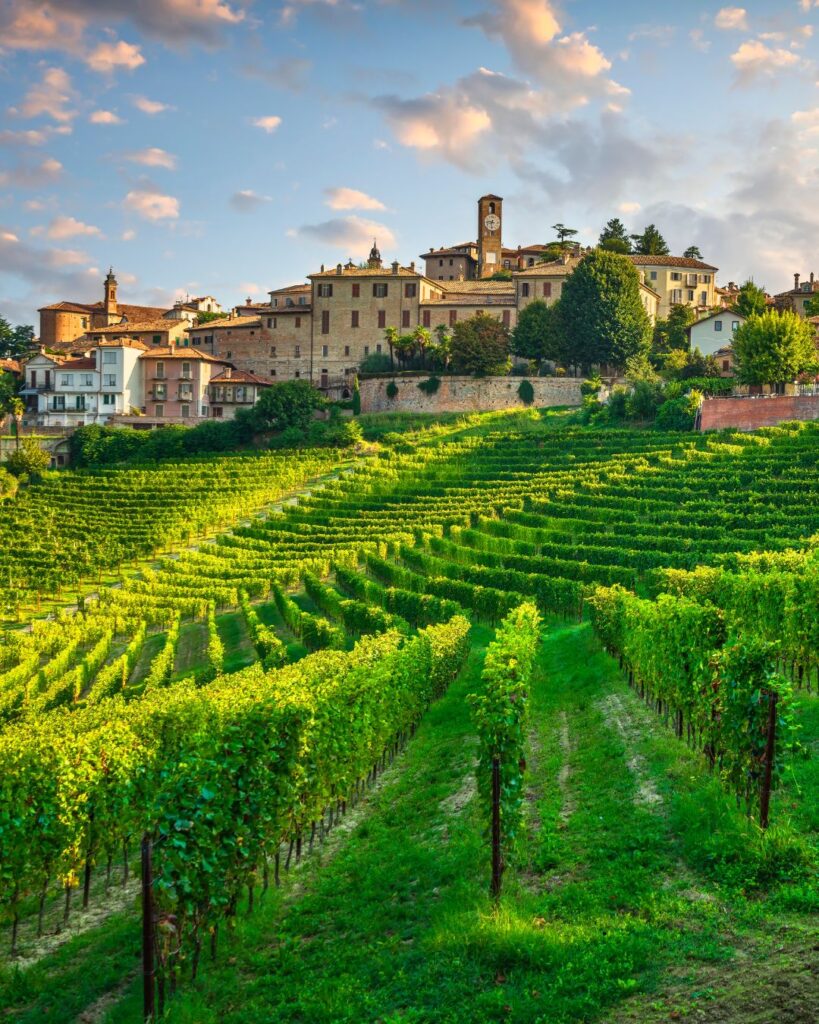
Best time to visit: October for the grape harvest (vendemmia). The air smells like fermenting wine and woodsmoke.
Piedmont is famous for Barolo and Barbaresco wines. Tourists flock to the town of Barbaresco itself. But three kilometers away, sitting on a hill like a sleepy cat, is Neive. And Neive is better.
The town has two parts: the old medieval village on top (called Neive Castello) and the newer lower town. Both are beautiful. But the top part – with its winding alleys, ancient towers, and hidden courtyards – feels like a movie set.
Why you have never heard of it: Barbaresco gets all the attention. Even locals sometimes forget Neive exists. That is fine with the people who live there.
Must-see one thing: The Piazza Italia in the lower town. It is shaped like a triangle and surrounded by pastel-colored buildings. On Saturday mornings, a tiny market sets up here. Buy a hunk of cheese, a loaf of bread, and a bottle of local Arneis white wine. Have a picnic on the church steps.
Local wine to try: Barbaresco. Yes, same as the famous town. But in Neive, you can taste it directly from family-owned vineyards without the crowds. Go to Cantina del Glicine. The owner, a man named Marco, will pour you five different vintages and tell you stories about each one.
My secret tip: Do not drive after tasting. Stay at Casa di Laura, a tiny B&B with three rooms. Laura makes breakfast with eggs from her own chickens. She will also drive you to wineries so you can drink without worry.
6. Atrani – Campania (Amalfi’s Quiet Twin)
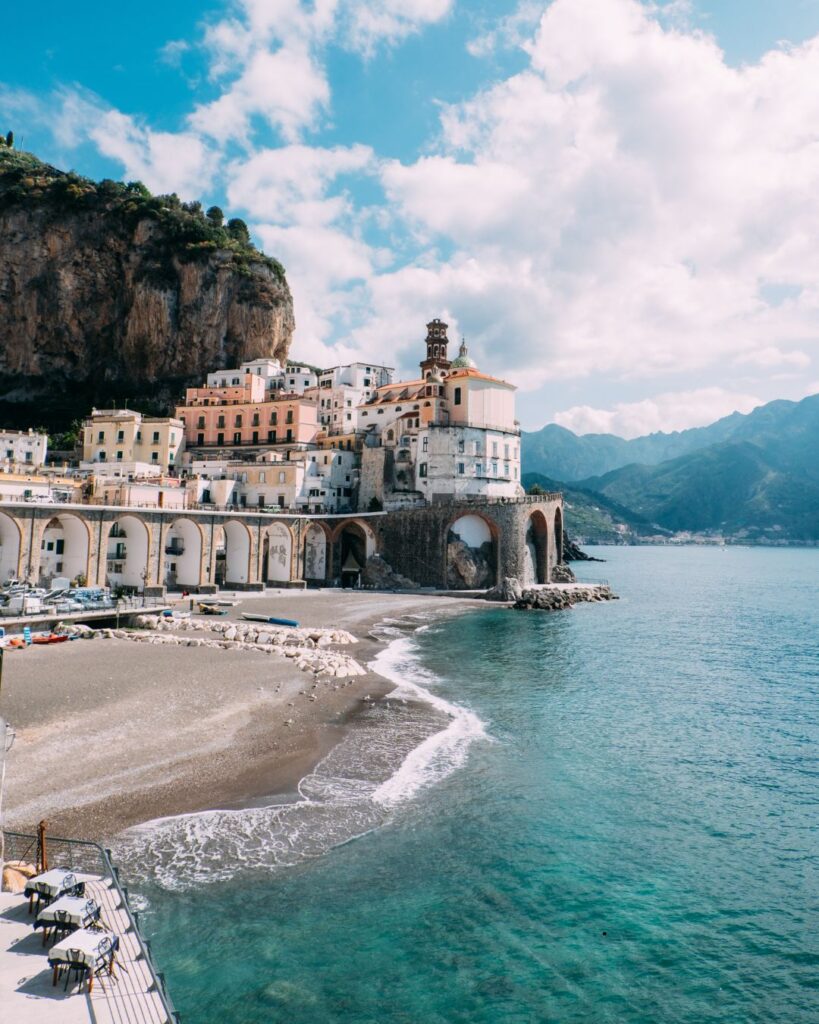
Best time to visit: April or October. In July and August, even Atrani gets busy – but still less than Amalfi.
You know the Amalfi Coast. You have seen the photos: dramatic cliffs, pastel houses stacked like books, turquoise water. But the famous towns – Positano, Amalfi, Ravello – are packed shoulder-to-shoulder in summer.
Atrani is 400 meters from Amalfi town. It is a fifteen-minute walk. And yet, most tourists never go there.
The town sits in the mouth of a river valley. The houses climb up both sides of the hill so steeply that some have stairs instead of streets. The main square is actually a small pebble beach surrounded by buildings. Old men play cards in the shade. Children kick soccer balls against church walls.
Why you have never heard of it: Atrani has no hotels. Only B&Bs and vacation rentals. Buses do not stop here. You have to walk from Amalfi or take a taxi. The effort keeps the crowds away.
Must-see one thing: The Church of San Salvatore de’ Birecto. It is small, simple, and 1,000 years old. The real treasure is the view from the church steps: the entire town funneling down to the sea.
Local food to try: Sfogliatella – a shell-shaped pastry filled with ricotta and candied orange peel. The best one is from Pasticceria Pantaleone in nearby Minori. But buy it in the morning. They sell out by 11:00 AM.
My secret tip: Swim at dawn. The beach in Atrani faces east, so the morning sun hits the water perfectly. I went down at 6:30 AM and had the entire sea to myself. No boats. No tourists. Just me, the waves, and a thousand seagulls.
7. Venzone – Friuli-Venezia Giulia (The Town That Refused to Die)
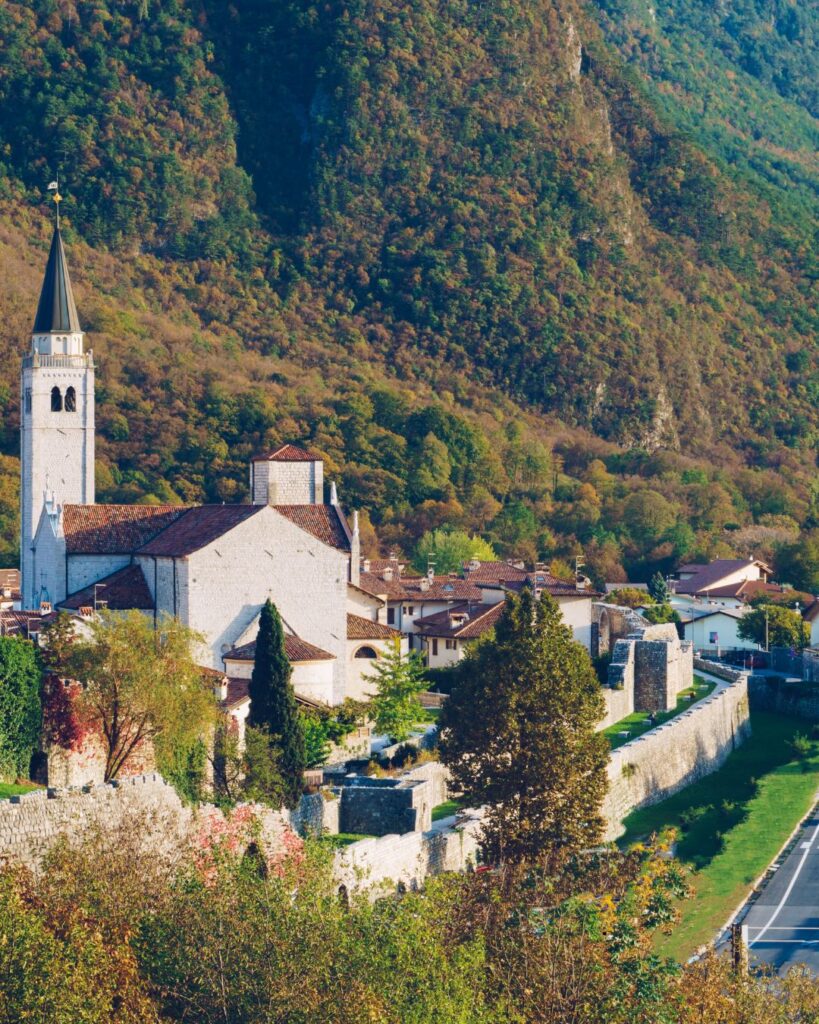
Best time to visit: September for the Friuli Doc food festival, or October for autumn colors and fewer tourists.
In 1976, a massive earthquake destroyed Venzone. Not damaged. Destroyed. Only three buildings remained standing. The rest was rubble.
But the people of Venzone did something extraordinary. They rebuilt the entire town, brick by brick, exactly as it was. They numbered every stone, catalogued every roof tile, and put everything back in its original place. The reconstruction took thirty years.
Today, you would never know. The town looks perfectly medieval: double walls, Gothic cathedral, fortified gates. But if you look closely, you can see the repairs. It is a monument to stubbornness and love.
Why you have never heard of it: It is in the far northeast corner of Italy, near the Slovenian border. Most visitors to Italy never go past Venice. Venzone is another two hours east.
Must-see one thing: The Cathedral of San Nicola. Inside the crypt, there are thirteen mummies. Naturally preserved bodies from the 14th to 19th centuries. They lie in glass cases, wearing their original clothes. Creepy? Yes. Fascinating? Absolutely.
Local food to try: Gubana – a spiral pastry filled with walnuts, pine nuts, raisins, and grappa. It is dense, sweet, and slightly boozy. Eat it with a small glass of dessert wine.
My secret tip: Visit the Mummy Museum (yes, that is the real name) in the morning when the light comes through the high windows. The shadows make the mummies look almost peaceful. Also, talk to the elderly ticket-seller. She lived through the earthquake. She will tell you stories that will break your heart.
8. Grottammare – Marche (The Pastel Paradise)
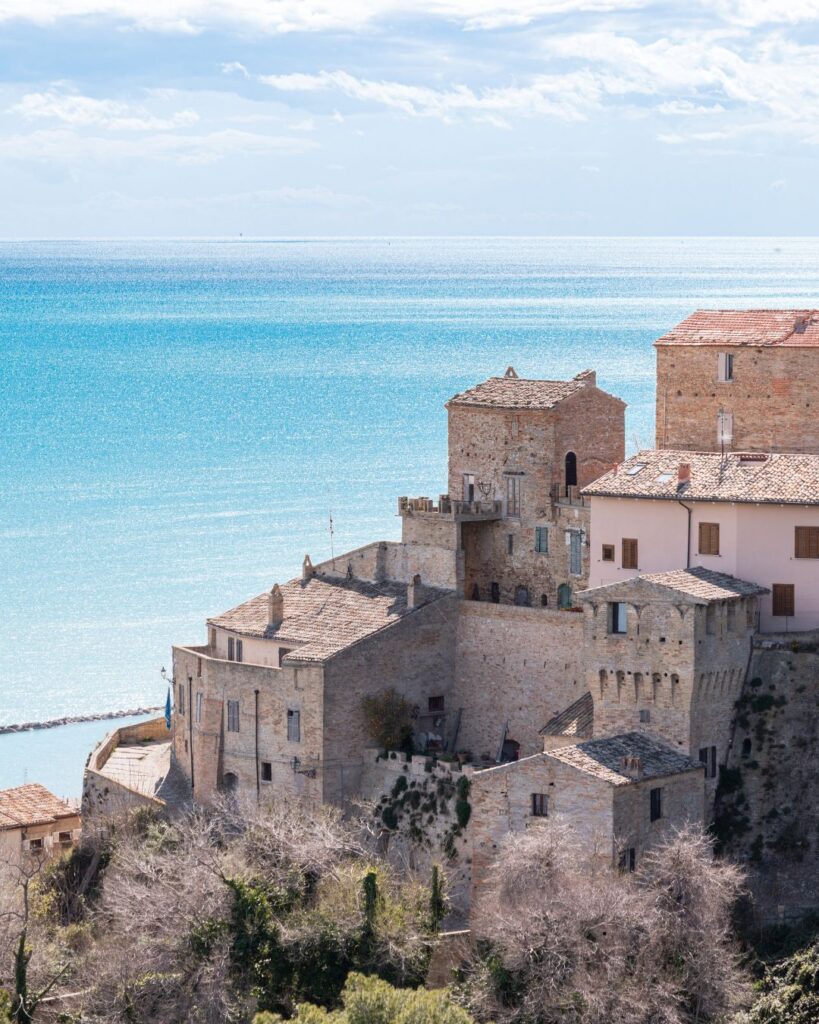
Best time to visit: June. The weather is warm but not hot, and the town is quiet before Italian school holidays.
Grottammare is two towns in one. The lower part is a modern seaside promenade with beaches, restaurants, and palm trees. The upper part – Grottammare Alta – is a walled medieval village on a hill.
The upper town is the reason you come. Narrow streets painted in faded pastels: pale pink, butter yellow, soft blue. Washing hangs between windows. Cats sleep on doorsteps. And at the top, a belvedere (viewpoint) looks straight down onto the Adriatic Sea.
Why you have never heard of it: The Marche region is Italy’s best-kept secret. It has everything – beaches, mountains, Renaissance art – and almost no international tourists. Grottammare is just one of dozens of charming towns here.
Must-see one thing: The Torrione della Battaglia – a massive round tower at the edge of the upper town. You can walk around its base for free. The view of the coastline stretching north and south is breathtaking.
Local food to try: Olive all’ascolana – giant green olives stuffed with meat, breaded, and fried. They are sold as street food from tiny shops called friggitorie. Order a cone of them, walk to the belvedere, and eat while watching the sunset.
My secret tip: Go to the lower beach at 7:00 PM. The crowds have left. The water is calm. Swim out about 50 meters and turn around. You will see Grottammare Alta glowing gold on the hill. It is one of those moments that makes you forget you ever owned a smartphone.
9. Dolceacqua – Liguria (The Bridge That Monet Painted)
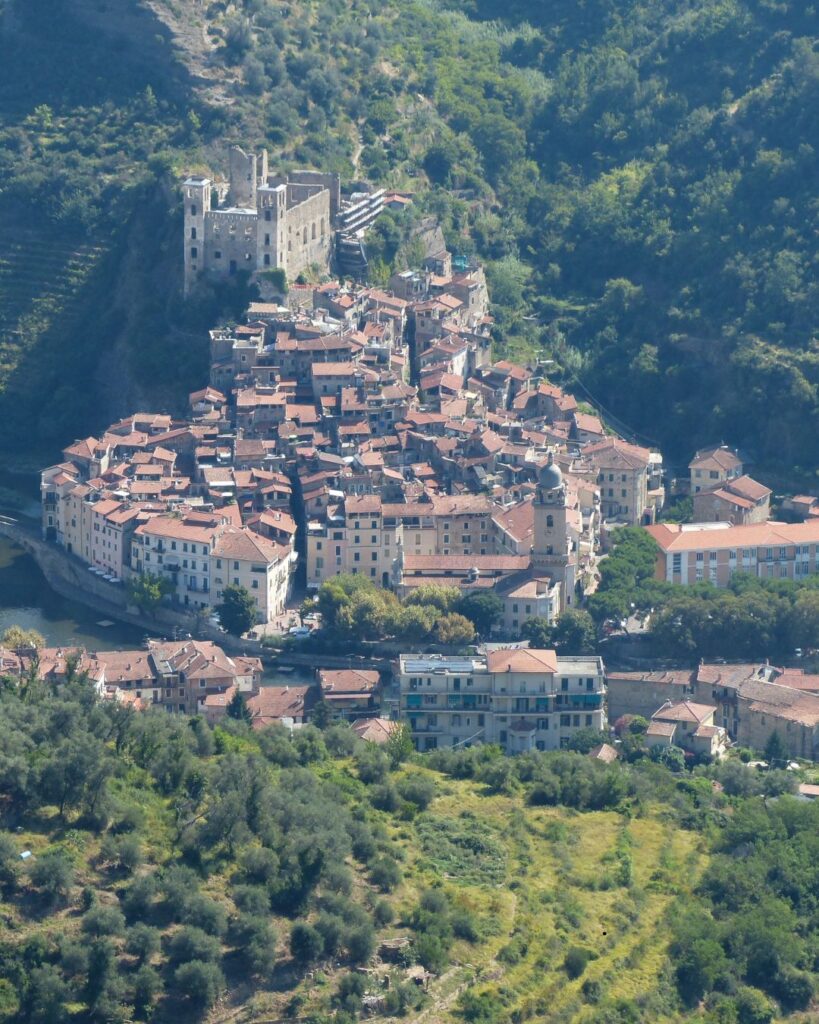
Best time to visit: May or September. The weather is perfect for walking, and the town is not yet flooded with summer tourists.
Claude Monet visited Dolceacqua in 1884. He painted the same arched bridge four times. He wrote to a friend: “This village is extraordinarily beautiful. It has a bridge that is a masterpiece of lightness.”
The bridge – Ponte Vecchio – still stands. It is a single stone arch that leaps across the Nervia River in one impossible curve. Above it, the ruins of the Doria Castle crumble into the sky. And around it, houses in deep ochre and terracotta cling to the hillside.
Why you have never heard of it: Dolceacqua is in western Liguria, near the French border. Everyone goes to the Cinque Terre instead. Dolceacqua is better – because you can actually walk here without being elbowed by strangers.
Must-see one thing: The Doria Castle ruins. It is a fifteen-minute uphill climb. The path is steep and uneven. But at the top, you can see the entire valley, the bridge below, and the Mediterranean Sea in the distance. Monet was right.
Local food to try: Pansoti – a triangular pasta stuffed with wild herbs and ricotta, served with walnut sauce. Ligurian cuisine is unique. It uses less tomato and more nuts, herbs, and olive oil. Eat at Osteria del Ponte, which faces the bridge. The view from your table is exactly what Monet painted.
My secret tip: Cross the bridge at 9:00 PM. The town lights up. The river reflects the yellow windows. And the old men of Dolceacqua gather on the far side to smoke cigars and talk politics. They will not include you in the conversation. But they will nod at you. And that nod is worth more than any restaurant recommendation.
How to Actually Visit These Towns (Practical Advice)
I have given you nine towns. Now let me save you from making my mistakes.
Getting Around
You need a car. I know, I know – driving in Italy sounds terrifying. But in these small towns, the roads are quiet. Rent the smallest car you can find. Fiat 500 is perfect. Do not rent a minivan or SUV. The streets in these towns are sometimes only two meters wide.
How Many Towns Per Trip?
Do not try to see all nine in one vacation. You will spend your entire trip in the car. Here are three realistic itineraries:
Northern circuit (7 days): Neive → Dolceacqua → Venzone
Central gems (5 days): Civita di Bagnoregio → Castelluccio di Norcia → Santo Stefano di Sessanio
Southern escape (4 days): Atrani → Grottammare
When to Go
April–June and September–October are perfect. July and August are hot and crowded (even these towns get busy). November–March is quiet but cold; some restaurants and B&Bs close entirely.
Money-Saving Tips
- Park outside the walls. Almost every town has free parking a five-minute walk away.
- Eat lunch at a forno (bakery). €5 for a slice of pizza or a panino.
- Stay in agriturismos (farm stays) instead of hotels. Cheaper, better food, nicer people.
Common Mistakes (Learn From Mine)
Mistake 1: Assuming every town has restaurants open for dinner. Small towns roll up the sidewalks by 8:00 PM. Eat early or go hungry.
Mistake 2: Forgetting cash. Half the places in these towns do not take credit cards. ATMs exist but are sometimes broken.
Mistake 3: Visiting on a Monday. Many museums, churches, and restaurants close on Mondays. Always check.
Mistake 4: Packing only sandals. These towns have cobblestones, stairs, and hills. Bring sturdy walking shoes.
Final Thoughts
I wrote this article because I am tired of people seeing Italy only through the lens of its famous cities. Rome is incredible. Florence changed my life. Venice is a miracle. But they are not the whole story.
The real Italy is Civita at dawn, with fog in the valley and no one else on the bridge. It is eating arrosticini in Abruzzo, standing up, grease running down your chin. It is swimming in Atrani before anyone else wakes up.
These 9 towns are beautiful. They are charming. And yes, you have never heard of them. But now you have. And I hope you go.
Which one would you visit first? I am genuinely curious. Drop a comment below – or better yet, bookmark this page and start planning. Your Italian adventure is waiting.
Again, feel free to go through the list below of my Italy recommendations that I have crafted after years of travel to this beautiful country:
- Packing List: Things Not to Go to Italy Without
- Must-Do Things: Unforgettable Experiences
- Where to Stay: Best Hotels in Italy.
- Where to Stay in Rome: Rome’s Best Neighborhoods
- Where to Stay in Florence: Picking the Best Area
- Where to Stay in Venice: Venice’s Best Districts
- Italy’s Cobblestone Streets: Best Shoes For the Job
- Backpack or Suitcase?: Italy Luggage Guide
- Travel Insurance: Always Be Covered
- E-Sim: Be Connected At All Times