
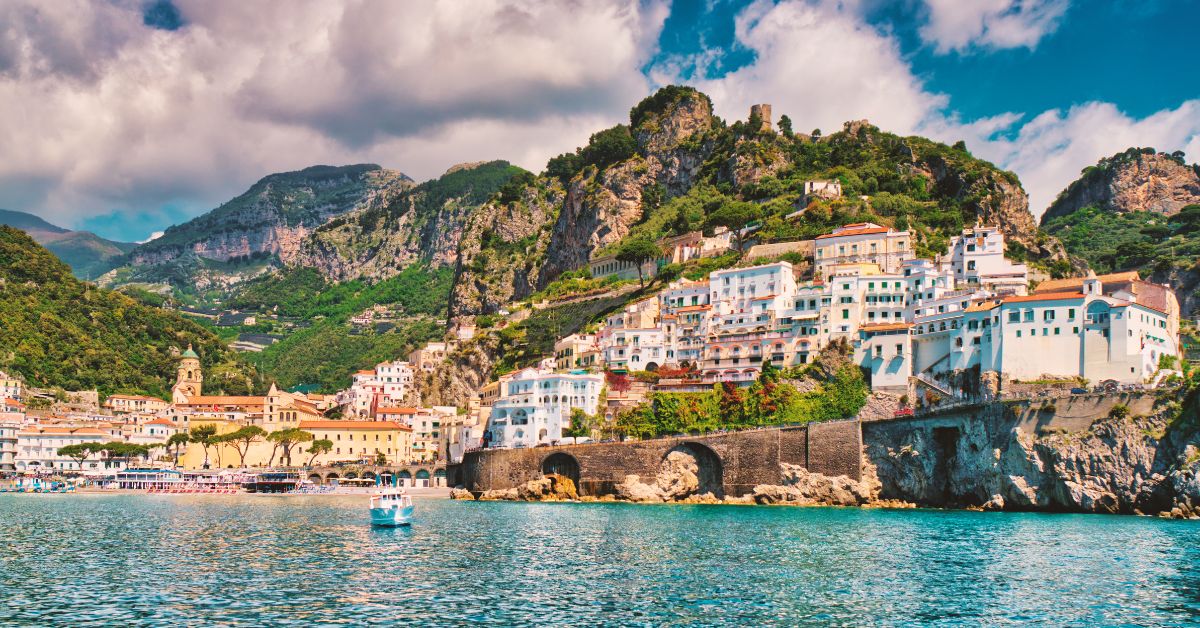
After a few intense days exploring the Colosseum and tossing coins into the Trevi Fountain, my wife and I were ready for a different kind of Italian magic—the kind that comes with lemon trees, cliffside villages, and the sound of waves lapping against pastel houses. The Amalfi Coast is that dream. But getting there from Rome can feel like a puzzle. Let me help you solve it.
The distance from Rome to the Amalfi Coast is only about 170 miles. But those miles twist through mountains and crowd onto narrow coastal roads. Depending on how you go, the journey can take anywhere from three hours to a full afternoon. The good news is that you have five excellent options. The best one depends on your budget, your luggage, and which little town you’re calling home for the night.
Before we dive in, remember that the Amalfi Coast isn’t a single destination. Sorrento (though technically not in the Amalfi Coast) is the easiest to reach. Positano and Amalfi town are the postcard stars. Ravello sits high above, quiet and cool. Your route changes depending on which one you choose. Keep that in mind as you read.
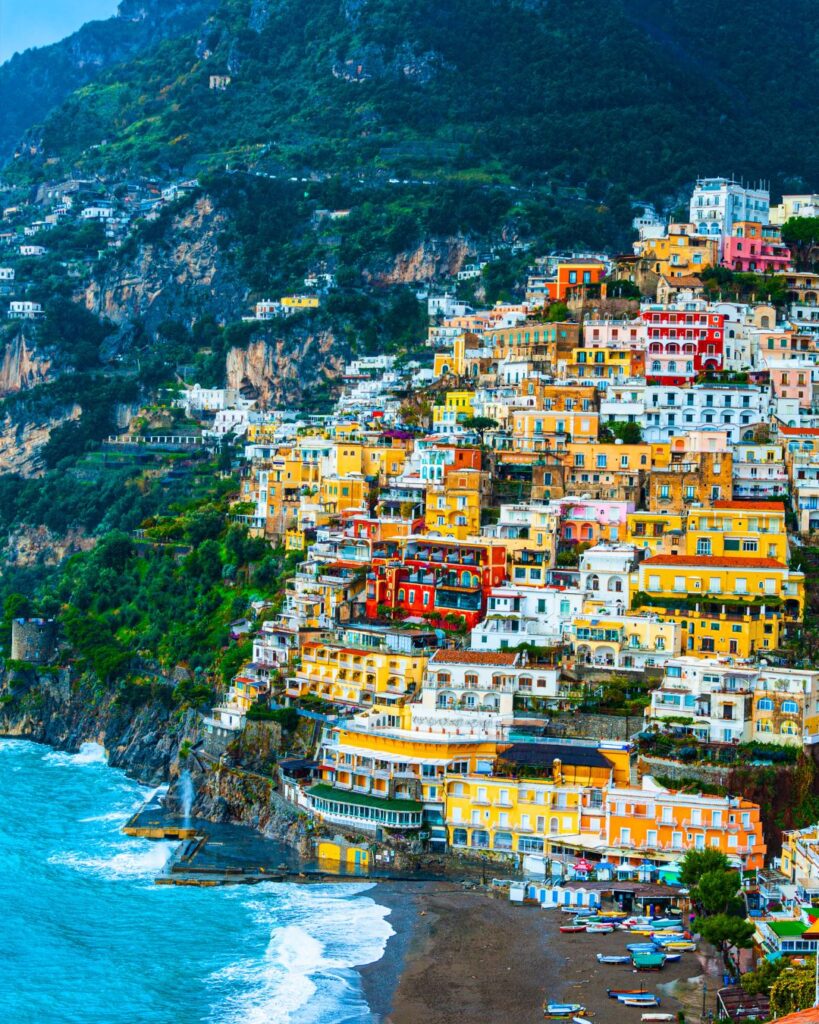
The Number One Mistake Travelers Make
Most people underestimate the final leg of the trip. They imagine stepping off a high‑speed train in Naples and magically arriving at their seaside hotel ten minutes later. Not quite. The coast is famously tricky to access. Plan for connections, and you’ll arrive relaxed instead of frustrated.
Option 1: Train Plus Ferry (The Scenic Sweet Spot)
This is my favorite way to go, and it’s the one my wife and I now use every time. It combines Italy’s excellent high‑speed trains with a beautiful boat ride along the coast. You avoid traffic, you avoid narrow cliffside roads, and you arrive right in the heart of your destination.
Start at Roma Termini. Hop a high‑speed train to Napoli Centrale. Both Trenitalia and Italo run this route, and tickets start as low as twenty euros if you book a few weeks ahead. The ride takes just over an hour. You’ll know you’re close when Mount Vesuvius appears outside the window.
Once in Naples, walk downstairs inside the same station to reach the Circumvesuviana train. This is a local commuter train, not a fancy one. It’s old, it can be crowded, and it’s absolutely perfect for getting to Sorrento in about an hour. Don’t bother buying a paper ticket in advance. Use your credit card to tap in and out at the gates. Easy.
From Sorrento, walk downhill toward the port. Ferries leave regularly for Positano, Amalfi, and even smaller towns like Minori and Maiori. The boat ride is short—fifteen minutes to Positano, about fifty minutes to Amalfi town. And the views are stunning. You’ll see the coast the way it was meant to be seen: from the water.
This option works best from April through October when ferries are running daily. Total travel time is about three to four hours. It’s not the cheapest, but it’s the most memorable.
Option 2: Train Plus Bus (Cheapest but Slowest)
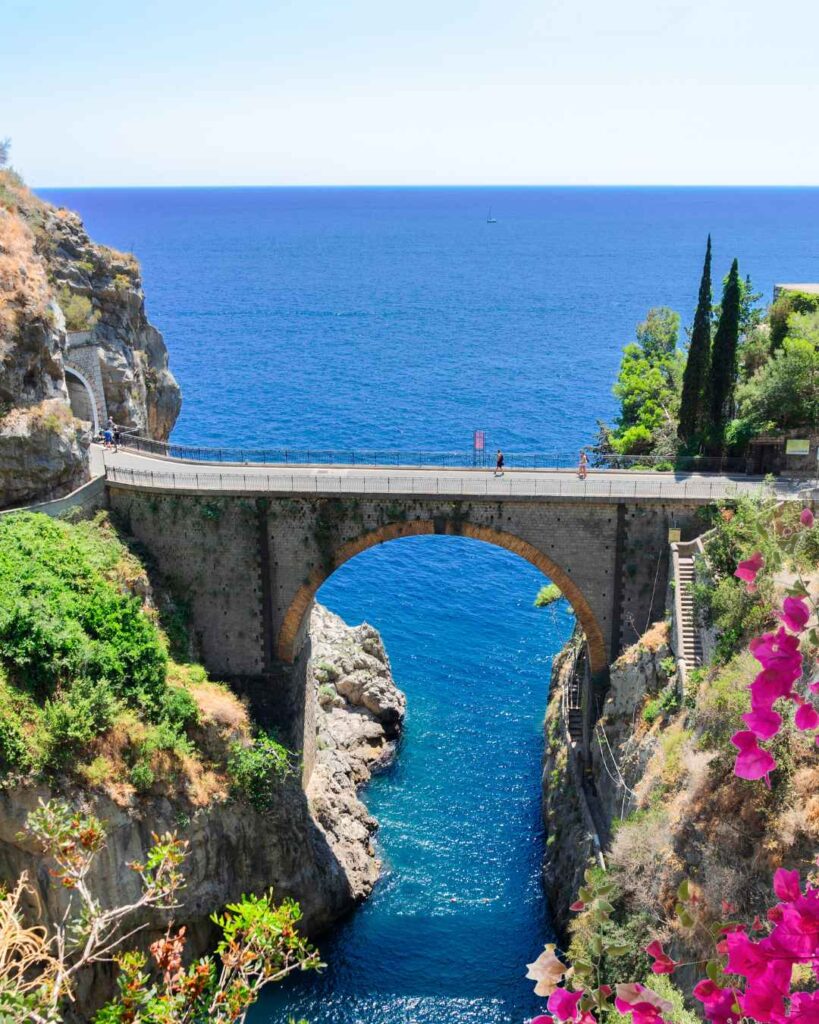
If you’re traveling on a tight budget, the bus will get you there. The first part is the same: high‑speed train from Rome to Naples. Then take the Circumvesuviana to Sorrento. From Sorrento’s train station, walk out front to the SITA bus stop. Buy a ticket at the tobacco shop nearby, validate it on board, and find a seat.
Here’s the catch. The SITA bus runs along the famous Amalfi Drive, a road that clings to cliffs and hairpin turns. It’s scenic. It’s also slow, crowded, and sometimes nauseating. In summer, you may stand for the entire hour‑long ride to Positano or the ninety‑minute ride to Amalfi. Large luggage is a nightmare.
Still, for solo travelers or light packers, it costs next to nothing. A bus ticket is just a few euros. Just avoid the midday rush and sit on the right side for the best sea views.
Related post: The type of bag you should bring to Italy
Option 3: Driving Yourself (Freedom with a Headache)
Renting a car in Rome sounds liberating. You come and go as you please. You can stop at a roadside stand for grilled artichokes. But here’s the honest truth: driving on the Amalfi Coast is not relaxing. The roads are narrow. Buses and scooters appear inches from your side mirror. Parking costs anywhere from twenty‑five to fifty euros per night, and many hotels have no spots at all.
If you still want a car, here’s the smart move. Drive from Rome to Sorrento or Salerno, park the car in a paid garage, and leave it there for your entire stay. Use ferries and local buses to explore the coast. That way you enjoy the freedom of a road trip without the daily stress of finding a parking space on a cliff.
One more thing. Many coastal towns have ZTL zones—restricted traffic areas—that fine you automatically if you drive in without a permit. Your rental car’s GPS won’t always warn you. So park outside the center and walk.
Option 4: Private Transfer (The Splurge That Saves Your Sanity)
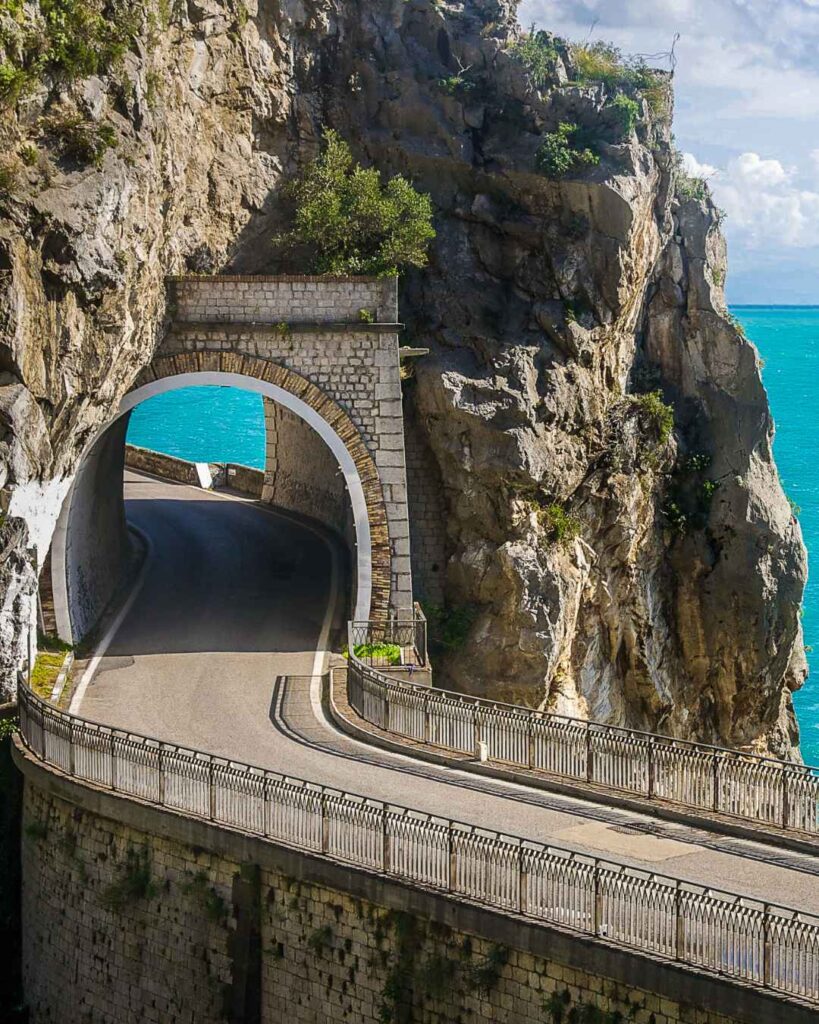
My wife and I have done this twice, usually when we arrive on a late flight or when we’re traveling with more luggage than we’d like to admit. A private driver meets you at the train station in Naples or even Rome’s airport or at Termini station, helps with your bags, and drives you door to door to your hotel on the coast. The ride takes about three hours.
Costs range from 150 to 550 euros for up to three people. That sounds like a lot, but consider what you’re buying: no dragging suitcases onto trains, no worrying about missed connections, no figuring out which bus stop to get off at in the dark. For a honeymoon or a special anniversary trip, it’s worth every euro.
Ask your hotel to recommend a licensed NCC driver. Book at least two weeks ahead in summer. And don’t be shy about requesting an English speaker—most good companies offer one.
Option 5: Direct Bus from Rome (The Summer Special)
During summer only, a company called Marozzi runs a direct bus from Rome’s Tiburtina station to Amalfi town. The trip takes about four hours. You sit back, watch the countryside turn into mountains and then sea, and wake up right in the center of Amalfi. No changes. No stress.
FlixBus also runs routes from Rome to Salerno, where you can catch a local SITA bus or a ferry to your final stop. These buses are cheap but less comfortable than the train, and traffic on the autostrada can add an hour or more. I recommend the direct Marozzi bus if your timing matches. Otherwise, stick with the train.
What About the Seasons?
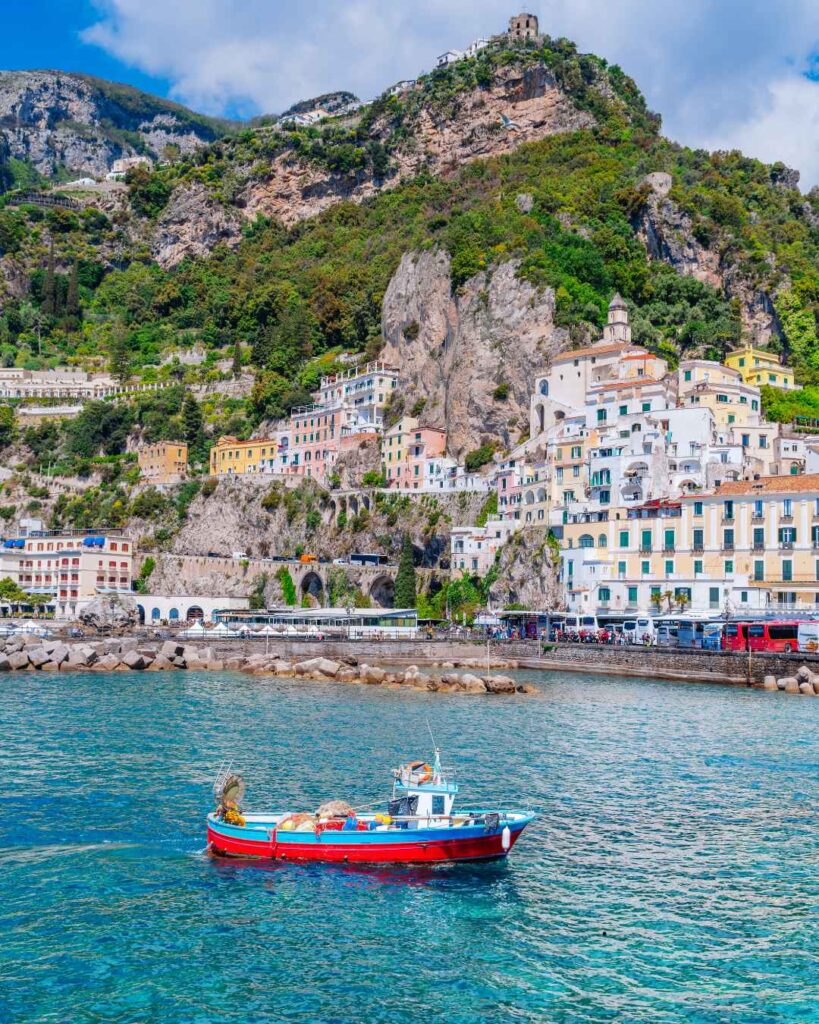
Summer is glorious on the coast, but it’s also crowded. Ferries run frequently, which is wonderful, but book your tickets a day ahead if you can. Trains from Rome to Naples fill up, so reserve those seats too.
Winter is quieter and cheaper. Many restaurants and hotels close from November through March, but the ones that stay open offer real warmth and lower prices. Ferries mostly stop running, so you’ll rely on buses or a private car. My wife and I visited once in February, and we had entire towns almost to ourselves. Just pack a jacket.
Cruise ship days in Naples turn the Circumvesuviana train into a sardine can. Check the port schedule online and either travel very early or very late if you want a seat.
A Word on Luggage
The Circumvesuviana train has no luggage racks to speak of. In rush hour, you’ll be standing in the aisle, holding your suitcase, while a local grandmother glares at you. Keep your bag small. Or use a luggage service like SendMyBag to ship your large suitcase directly to your hotel. It sounds indulgent, but after one trip hauling a heavy roller up Positano’s stairs, you’ll understand.
Ferries also have limits. Usually you’re allowed one large suitcase and one small bag per person. They’ll measure it if it looks too big.
3 Sample Itineraries
- If you’re on a tight budget, take the train from Rome to Naples, the Circumvesuviana to Sorrento, and the SITA bus to your destination. Total cost around thirty euros per person. Allow five hours.
- If you’re a couple looking for romance and ease, take the high‑speed train to Naples, the Circumvesuviana to Sorrento, and the ferry to Positano or Amalfi. Total cost around fifty euros per person plus ferry. Allow three to four hours.
- If you’re traveling with family or arriving after 3 p.m., book a private transfer. Four hundred euros or so, three hours, no stress.
Common Mistakes to Avoid
- Don’t buy Circumvesuviana tickets from a machine and then forget to validate them. The new tap‑and‑go system is simpler. Just use your credit card at the gate.
- Don’t confuse Roma Termini with Roma Tiburtina. The high‑speed trains leave from Termini. The direct buses leave from Tiburtina. They are not close to each other.
- Don’t trust Google Maps for ferry schedules. Use the official ferry company websites: Travelmar, NLG, and Alilauro. Or use the Ferryhopper app, which keeps schedules current.
- And please, don’t plan a day trip from Rome to the Amalfi Coast. You can do it in theory—leave at 5 a.m., return at 11 p.m.—but you’ll be exhausted and rushed. The coast deserves at least two nights. Give it that gift.
Related Post: Only stay in these towns in the Amalfi Coast
Final Thoughts
Getting from Rome to the Amalfi Coast takes some planning, but that planning pays off the moment you step off a ferry onto a dock lined with colorful umbrellas and the smell of fresh basil. The journey is part of the adventure. Choose the option that fits your style, pack light, and leave room for the unexpected.
One last tip from my wife and me: when you buy your train tickets, pay a few extra euros for a seat assignment on the high‑speed train. It’s a small thing, but after a long morning of travel, sitting together by the window with a coffee in hand feels like the trip has truly begun. Safe travels, and enjoy every curve of that stunning coast.
Again, if you need me to help you plan your dream trip to Italy, one that you will remember for the rest of your life, I will make sure that I come up with an itinerary that’s tailor-made for you, with respect to your time, interests, and budget. Feel free to contact me using the form below, and let’s get down to it. Your future self will thank you.